
Zing - Jewish Music Streaming
ZING MUSIC INCMusic & Audio
3.8472.00 Reviews
- Version
- 3.6.5
- Installs
- 100.00K
- Age Rating
- Everyone
Screenshots
Our Review of Zing - Jewish Music Streaming
 Analysis by Appyee
I approached Zing - Jewish Music Streaming as a listener looking for a focused way into Jewish music, rather than another all-purpose music player. That distinction matters: if I want familiar mainstream hits, a general streaming service is the obvious starting point; if I want to explore music connected to Jewish traditions and contemporary scenes, a dedicated catalog has a different appeal. My experience was enjoyable, though I’d treat it as a specialist listening option rather than a replacement for every music app I use.
Finding a starting point beyond familiar playlists
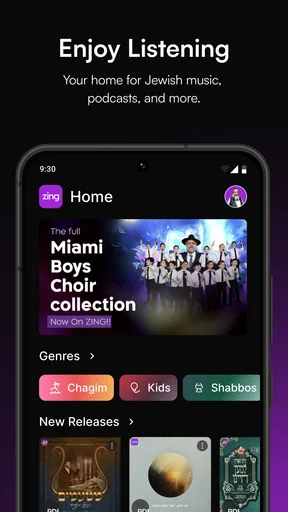
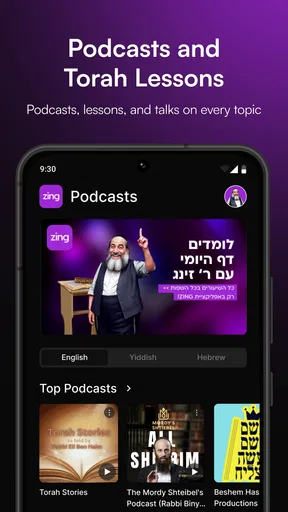
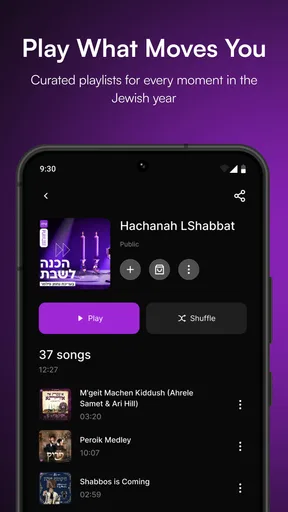
One of the first things that hit me when I opened Zing was the sheer variety of music available. Whether you're into traditional Jewish folk music, modern pop, or something in between, this app has got it all. It’s like walking into a candy store for music lovers. You get to explore different genres and artists that you might not have stumbled upon otherwise. The app does a great job of curating playlists that cater to diverse tastes, which is a huge plus for someone who likes to switch things up frequently.
That sense of discovery is most useful when I’m not sure what I want to hear. Instead of trying to guess the exact name of an artist or track, I can begin with a playlist and follow my curiosity from there. It gives the experience a different rhythm from opening a large general-purpose service, where popular charts and broad recommendations can dominate the first impression. A specialist library can make it easier to stay within a musical world while still hearing contrasts between older and newer styles.
I’d also use it as a listening companion for a particular moment, not only as a tool for catalog exploration. A playlist can provide a starting atmosphere while I’m cooking, getting ready for a gathering, or settling into a quiet afternoon. The practical advantage is that I don’t have to build the perfect queue before pressing play. If I’m listening with friends or family, a curated selection can help introduce music without turning the occasion into a search session.
Navigation that supports exploration
Now, I’m not exactly a tech wizard, so an app with a user-friendly interface is always a win in my book. Zing doesn’t disappoint. The layout is intuitive, making it super easy to navigate through various features. Whether you’re searching for a specific artist or just want to discover something new, everything is just a tap away. The search function is pretty robust too, helping you find exactly what you're in the mood for without any hassle.
Search and browsing serve different purposes here, and I’d use them accordingly. When I already know the artist or track I want, search is the quickest route. When I only know the broad mood or want to hear something outside my usual rotation, browsing playlists is a better bet. That small distinction can save time: repeatedly searching vague terms tends to be less satisfying than choosing a curated starting point and letting it play.
For a listener new to Jewish music, I’d avoid treating the first result as a complete guide to the genre. A few different playlists can reveal how varied the listening experience is, and moving between them is a more helpful introduction than expecting one search to represent everything. I’d also keep a note of artist names that catch my attention, so I can return to them directly rather than relying on memory after a long listening session.
Recommendations and the role of repetition
One of my favorite aspects of Zing is how it tailors the music recommendations based on your listening habits. It’s like the app gets to know your vibe and starts suggesting tracks that are right up your alley. This personalized touch makes the whole experience feel a bit more special, kind of like having a personal DJ who knows exactly what you want to hear next.
There’s a trade-off with any recommendation system: the more often I choose familiar tracks, the more likely my listening can settle into a narrow lane. I’d use personalized suggestions as a convenient next step, not as the only route through the catalog. Switching between recommendations and curated playlists is a simple way to keep the experience from becoming too predictable, especially if I’m using the app regularly rather than just for an occasional visit.
A useful everyday workflow is to start with a recommendation when I have only a few minutes, then move to a playlist when I have longer to listen. That keeps the decision lightweight without asking the app to define my taste completely. If a suggestion misses the mood, I can change direction rather than repeatedly skipping in the hope that the next track will fix the queue. For me, the feature is best understood as a shortcut to possibilities, not a promise that every pick will fit.
Listening when a connection is unreliable
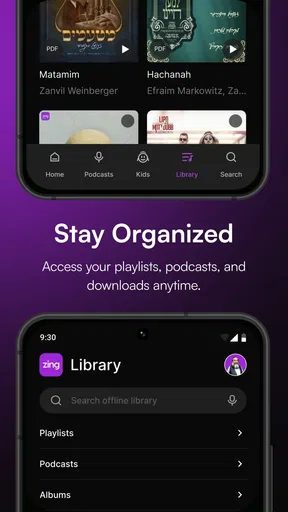
For those times when you just can’t be bothered with a Wi-Fi connection—like when you’re on a flight or in the middle of a road trip—Zing’s offline listening feature comes to the rescue. You can download your favorite tracks and playlists to listen to anytime, which is a lifesaver if you ask me. No more worrying about buffering or using up your data; just pure, uninterrupted music bliss.
Offline listening is especially practical when I know in advance what kind of listening I’ll want. Before leaving home, I’d choose a playlist for the journey or save music I already know I enjoy, rather than relying on a live connection to find the right thing once I’m on the move. This is a small planning step, but it changes the app from a discovery tool into a dependable part of a commute or trip.
There is a trade-off: downloads work best for planned listening, while browsing and recommendations are naturally more useful when I’m connected. I’d think of offline access as a way to carry a selected slice of the library, not as a reason to stop exploring online. If I’m preparing music for a shared drive, I’d also choose a mix broad enough for the people listening with me instead of assuming everyone wants the same style throughout the trip.
Sharing music without making it the whole experience
Another cool feature is the community aspect. You can see what your friends are listening to and even share your favorite tunes with them. It's a fun way to discover new music and connect with others who share your musical tastes. Plus, there are curated playlists based on community trends, keeping you in the loop with what’s hot at the moment.
I see sharing as a useful handoff between listening alone and listening together. If a track makes me think of someone, sharing it can start a conversation or give them a direct route to something they might enjoy. Community activity can also offer a different discovery cue from personalized recommendations: it reflects what people are choosing, rather than only what fits my own listening habits. I’d treat those trends as prompts, not as a definitive measure of what is worth hearing.
For a gathering, I’d use the app to find a starting playlist and share interesting discoveries beforehand, rather than trying to coordinate everyone’s choices while music is playing. That keeps the social side light and makes it easier to move between listening and conversation. If I prefer to keep my music habits private or don’t want a social layer in my listening routine, I can simply focus on search, playlists, and playback; the community angle is not the only reason to use it.
Where it fits beside general streaming services
Compared with a broad music service, this app’s strongest reason to be in my rotation is its Jewish-music focus. General platforms can be more convenient if I want one place for a wide mix of global pop, podcasts, and every unrelated genre I happen to enjoy. A specialist service makes more sense when I want to spend time exploring Jewish artists and playlists without having to build that context from scratch. The choice is less about one type of service being universally better and more about what I want to hear that day.
I wouldn’t recommend switching away from an established general service solely for this app if your listening is mostly centered on mainstream releases or a very wide range of unrelated music. Instead, I’d consider using it alongside one: keep the general app for broad listening, and open this one when I want a more focused selection. That arrangement also makes the decision clear. If I regularly find myself searching for Jewish music in a larger catalog, a dedicated option may be a more comfortable place to browse.
The app is free to start, while in-app purchases range from $6.99 to $179.99 per item. I’d take a moment to check what an offered purchase includes before committing, especially if I’m only trying the service for a particular event or a short period. Its average rating is 4.0 from around 2.7 thousand ratings, with about 465 written reviews; that gives a broad sense of user response, but it doesn’t tell me whether the catalog matches my own taste, so trying the free experience is the more useful test.
Practical fit, cost, and compatibility
Zing is a free music and audio app from ZingMusic LTD, with an Everyone age rating and more than 100 thousand installs. It was released on March 29, 2016, and its current version is 3.6.5. It requires Android 7.0 or later. Those details make it easier to judge whether it fits an older Android device and whether the app is suitable for a family environment, while the in-app purchase range is worth bearing in mind if I’m comparing the cost with a service I already use.
For a typical weekday, I can imagine opening it while making breakfast, choosing a playlist instead of spending time assembling a queue, and saving a few favorites before heading out. Later, if I’m on a train with an unreliable connection, those downloads are the part that makes the earlier choice worthwhile. In the evening, recommendations or community playlists can help me find something new. That sequence uses discovery, preparation, and sharing for different jobs instead of expecting one feature to do everything.
I’d recommend it most to listeners who actively want Jewish music, people who enjoy discovering artists through curated selections, and anyone who would value having relevant listening ready for offline moments. It may be less useful to someone who wants a single all-purpose library for every genre, or who rarely listens to this musical area. In that case, a general streaming app may be simpler, particularly if the user already has a well-developed library and doesn’t want another place to manage listening.
Final thoughts
Overall, Zing - Jewish Music Streaming is a fantastic app for anyone looking to dive into the vibrant world of Jewish music. Its user-friendly interface, diverse music selection, and personalized features make it a must-have for music lovers. Whether you’re a lifelong fan of Jewish music or just curious to explore new sounds, Zing offers something for everyone.
So, if you’re ready to embark on a musical journey, give Zing a go. It might just become your new favorite app. Happy listening!
Verdict
Strengths of Zing - Jewish Music Streaming
- Extensive library of Jewish music.
- User-friendly interface.
- High-quality streaming with no lags.
- Offline listening available.
- Personalized playlists and recommendations.
Limitations of Zing - Jewish Music Streaming
- Limited to Jewish music genre.
- Requires subscription for full features.
- Occasional ads in free version.
- No lyrics display option.
- Limited social media integration.
Similar Picks in This Category
View All
YouTube Music
Google LLC4.4

Samsung Music
Samsung Electronics Co., Ltd.3.8

Spotify: Music and Podcasts
Spotify AB4.3

JioSaavn - Music & Podcasts
Saavn Media Limited4.3

Lark Player:Music Player & MP3
Lark Player Studio - Music, MP3 & Video Player4.6

StarMaker: Sing Karaoke Songs
SKYWORK AI PTE. LTD.4.3
Frequently Asked Questions
What is Zing - Jewish Music Streaming?
Zing - Jewish Music Streaming is a dedicated platform that offers a vast collection of Jewish music across various genres. From traditional to contemporary, it provides users with access to a wide range of tracks and playlists that cater to different tastes and occasions. Ideal for anyone interested in Jewish culture and music.
Is Zing available on both Android and iOS devices?
Yes, Zing - Jewish Music Streaming is available for download on both Android and iOS platforms. Users can easily find the app on the Google Play Store for Android devices and the Apple App Store for iOS devices, ensuring access across a range of smartphones and tablets.
Does Zing offer offline listening options?
Zing provides offline listening features, allowing users to download their favorite tracks and playlists. This is particularly useful for those who want to enjoy music without an internet connection, whether during travel or in areas with limited connectivity. Simply select your desired tracks and download them for offline access.
Are there any subscription fees for using Zing?
Zing - Jewish Music Streaming offers both free and premium subscription plans. The free version includes access to a wide selection of music with occasional ads. The premium subscription, available for a monthly fee, offers an ad-free experience along with additional features such as offline downloads and higher-quality audio streaming.
How does Zing personalize the music experience for users?
Zing uses advanced algorithms to personalize music recommendations based on users' listening habits and preferences. By analyzing the tracks and genres you frequently listen to, Zing curates playlists and suggests new music to enhance your listening experience. This ensures a tailored music journey, keeping it fresh and enjoyable.
